Laser gum treatment
Laser soft tissue treatment uses a dental laser to remove inflamed tissue lining infected gum pockets and to reduce bacteria there. It is for patients with gum disease whose pockets have not healed with cleaning alone, and for some gum reshaping needs.
This page is general information. A diagnosis needs an exam.
The details
Good candidates have gum disease with pockets that bleed and have not settled after deep cleaning, in areas the laser can reach. Advanced bone loss, very loose teeth or uncontrolled health conditions such as diabetes can change the plan.
About 1 to 2 hours, depending on how many areas are treated
1 to 2 treatment visits, then follow-up checks
Local numbing; sedation available
Tender gums for a few days. Soft foods and gentle brushing help, and most patients return to work the next day or sooner.
How it works
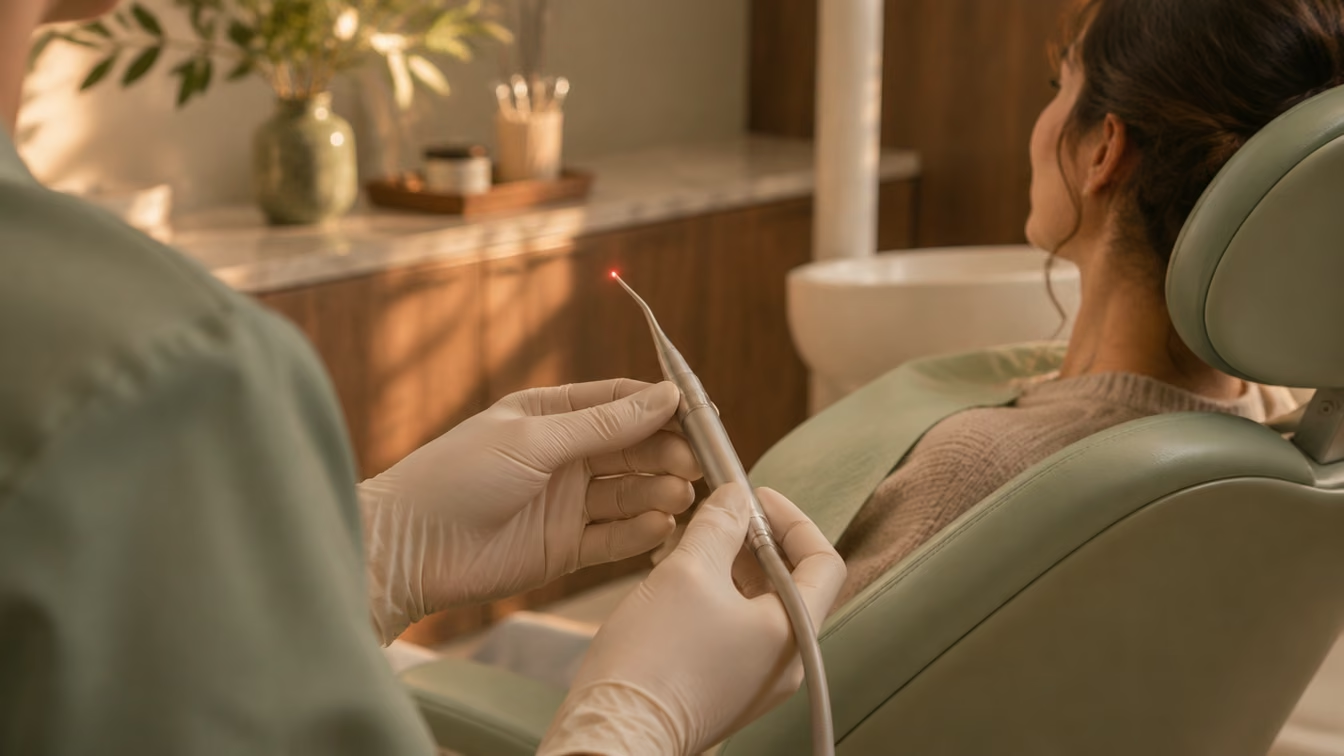
The area is numbed first. The dentist guides a thin laser tip into the gum pocket, where the light removes diseased tissue from the pocket lining and reduces bacteria. Tartar on the root is cleaned off with ultrasonic and hand instruments, because the laser is used alongside that cleaning rather than in place of it.
You may notice warmth, a faint snapping sound or a slight smell during treatment. The laser seals small blood vessels as it works, so there is often less bleeding than with a scalpel. Most patients go back to their normal routine the same day or the next morning, with a few care instructions for the treated area.
For a few days your gums may feel tender, and we suggest soft foods and gentle brushing where you were treated. The gums heal and tighten over the following weeks, and we measure your pockets again at follow-up visits. Lasers do not suit every case. An exam with pocket measurements decides whether this approach fits you.
Alternatives
Scaling and root planing alone often works well for early to moderate pockets.
Daily tray therapy at home can support healing after laser treatment or deep cleaning.
Deep pockets with significant bone loss may need a surgical approach, which we explain if your exam points that way.
Problems this treats
Questions patients ask about laser gum treatment
The area is numbed first, so most patients feel warmth, pressure or a faint snapping sound rather than pain. Afterward your gums are usually tender for a few days, and over-the-counter pain relief is often enough if your health allows it. Sedation is available if you feel anxious. Soreness that gets worse after a few days should be checked at the office.
It is not a replacement for one. Laser treatment is used along with cleaning of the roots, mostly where pockets stay deep or inflamed. Many patients do well with scaling and root planing alone. Which approach fits depends on your pocket depths, your bone levels and how your gums responded to earlier care, all of which we check at an exam.
Book a visit at Chauncey Ranch Dental
Or call (480) 661-4867 or text us.